In this guide
- The Short Answer
- What Is a CBD Certificate of Analysis?
- Step 1: Check Who Did the Testing
- Step 2: Make Sure the Report Matches the Product
- Step 3: Read the Cannabinoid Results
- Step 4: Find the THC Line
- Step 5: Look for Contaminant Testing
- Red Flags on a CBD Lab Report
- Where to Find Pin High CBD Lab Reports
- Frequently Asked Questions
Almost every CBD brand says its products are “lab tested”. The proof is in the lab report itself, called a Certificate of Analysis or COA. A COA can tell you how much CBD is really in the bottle, whether THC was found, and whether the report even belongs to the product you are buying. But most people open one, see a page of numbers and abbreviations, and close it again. This guide walks you through how to read a CBD lab report in a few minutes.
The Short Answer
- A COA is a report from a testing lab that lists what was found in a product sample.
- Check that it matches the product name, size and strength you are buying.
- Look at the cannabinoid results for CBD, other cannabinoids such as CBG and CBC, and THC.
- “ND” means “not detected”: the lab did not find that compound above its detection limit.
- Prefer an independent lab, not one owned by the brand, and look for its accreditation.
What Is a CBD Certificate of Analysis?
A Certificate of Analysis is a document from a laboratory that has tested a sample of a product. For CBD, the lab measures the cannabinoids in the sample, and sometimes also checks for contaminants such as heavy metals, pesticides, solvents or microbes. A brand that is confident in its products makes the COA easy to find, usually on the product page or through a QR code on the label.
Step 1: Check Who Did the Testing
Near the top of the report you will find the lab’s name, address and often its accreditation. Look for:
- An independent, third-party lab. A report from the brand’s own lab is less useful.
- ISO/IEC 17025 accreditation. This is the international standard for testing labs. Many reputable labs list it on their reports.
- Dates. The report should show when the sample was received and tested.
Step 2: Make Sure the Report Matches the Product
A COA is only useful if it is for the product in your hand. Check the sample name, the product type (cream, tincture, spray) and the stated strength. If a brand shows a report for a different product, or a report for an oil when you are buying a cream, that is a red flag.
Step 3: Read the Cannabinoid Results
This is the main table. It lists each cannabinoid the lab tested for, usually with these columns:
| Column | What it means |
|---|---|
| Analyte | The compound tested, for example CBD, CBG, CBC, Δ9-THC or THCA |
| mg/g | Milligrams of the compound per gram of product |
| % | The same result as a percentage of the sample’s weight |
| LOQ or LOD | The smallest amount the lab can reliably measure or detect |
| ND | Not detected: below the lab’s detection limit |
To compare the report with the label, remember that the label usually gives a total for the whole container, while the COA gives an amount per gram or per milliliter. Multiply by the product’s net weight or volume to get a rough total.
Step 4: Find the THC Line
If you want to avoid THC, this is the line that matters most. Look for Δ9-THC (delta-9 THC) and THCA, and for a “Total THC” figure if the lab gives one. Under federal rules, hemp products have been defined by a limit of 0.3% delta-9 THC on a dry-weight basis, and those rules are changing, so check the latest rules where you live.
Full-spectrum products often show a small amount of THC. Products made with isolates should show THC as ND. Pin High CBD creams and tinctures are made with isolates, with no THC in the formula, and THC was not detected on their lab reports. You can read the cream report on our THC-free CBD cream page. To learn more about extract types, see Full Spectrum vs. Broad Spectrum vs. CBD Isolate.
Step 5: Look for Contaminant Testing
Some COAs also include panels for:
- Heavy metals such as lead, arsenic, cadmium and mercury
- Pesticides
- Residual solvents left over from extraction
- Microbials such as yeast and mold
Each panel should show a result and either “Pass” or the allowed limit. Not every report includes every panel, so if contaminant testing matters to you, check which ones are listed or ask the brand.
Red Flags on a CBD Lab Report
- No lab name, no contact details or no dates
- The product name or strength does not match the label
- The report is for a different product type
- CBD results far below what the label promises
- THC detected on a product sold as “THC-free”
- No report at all, or “available on request” with no reply
Where to Find Pin High CBD Lab Reports
Our products are independently lab tested, and the reports are linked from the product pages:
- 5000 mg CBD Muscle & Joint Cream (5,000 mg of CBD, CBC and CBG in a 4 oz jar)
- 2000 mg CBD Cream pump bottle
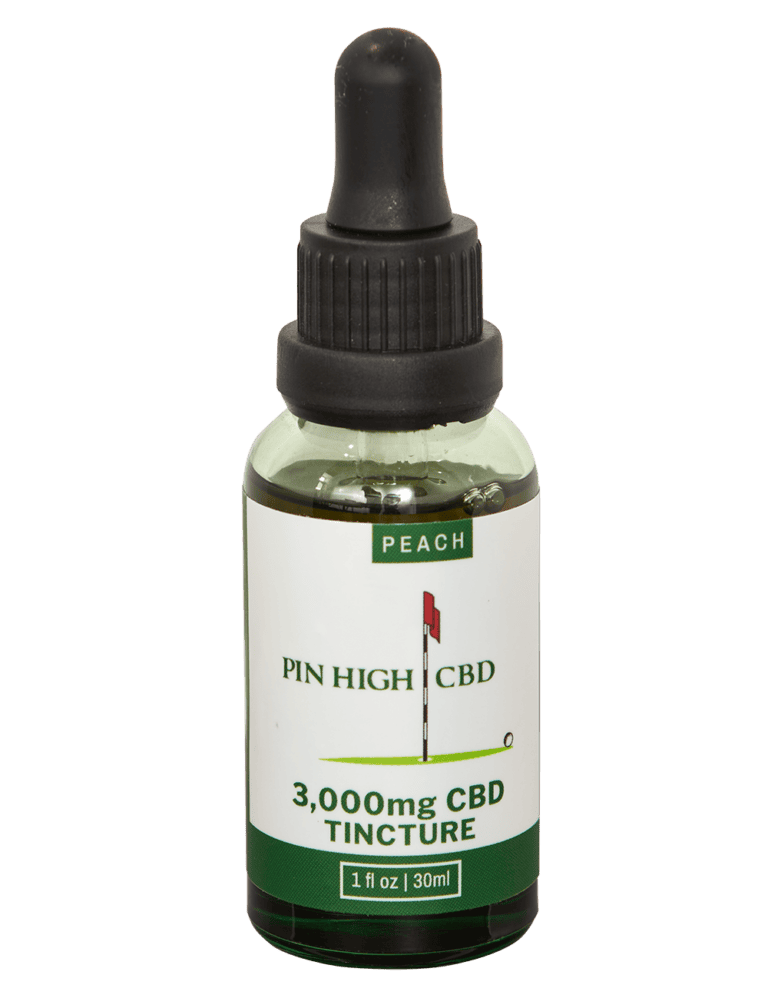
- Peach and Mint CBD Tinctures (3000 mg CBD per 1 fl oz)
The report for our CBD spray is being updated. If you have a question about any report, contact us.
Frequently Asked Questions
What does ND mean on a CBD COA?
ND stands for “not detected”. The lab did not find that compound above the smallest amount its method can detect.
Does a THC-free lab report mean I will pass a drug test?
No. A COA shows what was found in the tested sample, and drug tests and personal circumstances vary, so no company can guarantee a result. Read Does CBD Show Up on a Drug Test?
Why do the mg on the label and the COA look different?
The label usually gives the total for the whole container, and the COA usually gives an amount per gram or per milliliter. Convert one to the other before you compare.
Is CBD safe with my medications?
CBD can interact with some prescription medications. If you take any regular medication, or are pregnant or nursing, talk with your doctor first.
These statements have not been evaluated by the Food and Drug Administration. These products are not intended to diagnose, treat, cure or prevent any disease. For adult use only.
THC-free CBD, made in the USA
Ships within 2 days · Free shipping over $125 · Lab tested

We make THC-free CBD creams, spray and tinctures with CBD isolate in the USA, with a lab report for every product. Our guides cover how to fit CBD and CBN into everyday, active and evening routines.